Framework Based On Interoperability Principles For Ethical & Economically Sustainable Ai In Health Systems
At Yajur Healthcare, we advocate for a robust framework for healthcare AI. This framework is built upon four core principles of interoperability to ensure AI is both ethical and economically sustainable.
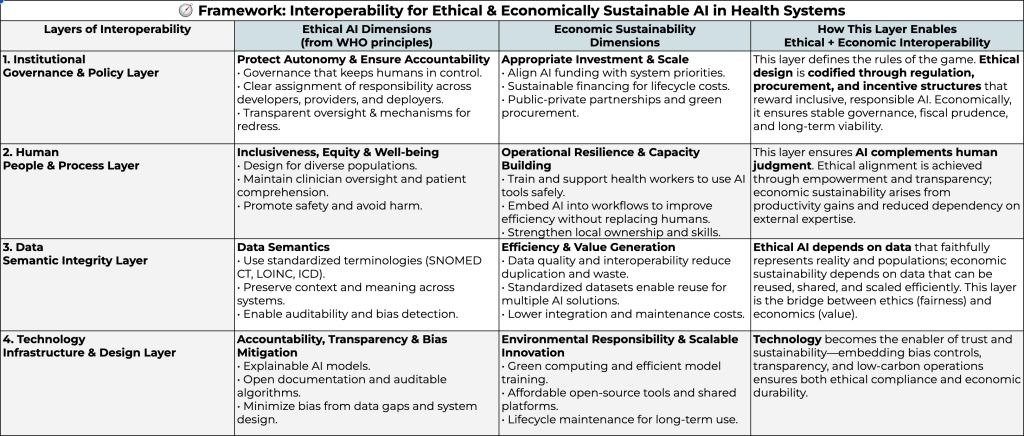
Core Principles of Interoperability
1. Transparency
Transparency involves openness about data sources, algorithms, and decision-making logic.
- Application in Ethical AI: Prevents bias and builds trust by allowing stakeholders to understand how AI-driven decisions are made.
- Application in Economically Sustainable AI: Reduces redundant data collection and processing, significantly lowering R&D and operational costs over time.
2. Accessibility
Accessibility ensures that AI tools are usable by all intended stakeholders.
- Application in Ethical AI: Ensures AI tools are usable by diverse health professionals and patients, bridging the digital divide and promoting equity.
- Application in Economically Sustainable AI: Maximizes Return on Investment (ROI) by enabling wider adoption across varied health environments and systems.
3. Standardized Data Exchange
Consistency in how data is shared and interpreted.
- Application in Ethical AI: Facilitates consistent data interpretation (clinical semantics) across systems, which is critical for ensuring patient safety.
- Application in Economically Sustainable AI: Lowers integration costs and enables modular updates, protecting long-term technology investments and reducing vendor lock-in.
4. Governance & Trust
Establishing accountability and clear protocols for data use.
- Application in Ethical AI: Clear accountability and consent mechanisms for data use, protecting patient autonomy and privacy.
- Application in Economically Sustainable AI: Builds stakeholder confidence, leading to broader market acceptance and sustained participation in a digital health ecosystem.
This article was originally published on the HCITExperts Blog by Yajur Healthcare.